Isaiah 9-12
I think being the eldest daughter has something to do with why I've always been so determined to do things myself.
I don't particularly enjoy asking for help. If there's something I want, I'd rather figure out how to get it. If there's somewhere I want to go, I'll make a plan. If something needs to be done, I'll find a way to do it.
And for a long time, that worked out pretty well for me.
I worked, made my own money, traveled, bought things I liked, and generally enjoyed the freedom of being able to do what I wanted. I wasn't rich by any means, but I was comfortable. Comfortable enough to have visited 28 countries, lived in Italy, and collected a fair amount of experiences I'm still very grateful for.
I thought I was doing quite well for myself.
And I was, in a way.
But reading Isaiah 9–12 made me think about how easily being capable can turn into believing that everything we have is entirely our own doing.
In Isaiah 10, the king of Assyria boasts about everything he's accomplished through his own strength and wisdom. He's conquered nations, accumulated wealth, and become extraordinarily powerful. And he seems rather impressed with himself.
Then God asks whether an axe should boast over the person who uses it.
I had to sit with that for a moment.
Because, well, an axe congratulating itself for chopping down a tree would be a little ridiculous.
And yet I wonder how often I do something similar.
I work hard, accomplish something, and feel proud of myself. Which isn't necessarily wrong. There's nothing wrong with being pleased about something you've worked for.
But how often do I stop to think about everything that made it possible in the first place?
The health that allowed me to work. The opportunities that became available to me. The people who helped me along the way. The ability to learn, to think, to move, to earn a living.
Even the strength to work hard was something I had been given.
I don't think I understood that very well before.
Or perhaps I understood it in theory. I knew God was the source of my blessings. I thanked Him for things when I remembered to. But I still lived as though the future depended almost entirely on what I could accomplish.
And I made plans accordingly.
Lots of them.
Plans about where I wanted to travel, what I wanted to buy, how much money I wanted to make, what I wanted my life to look like in five years.
I don't remember leaving much room for the possibility that God might have something different in mind.
I suppose that's one of the things I've been learning lately.
That being able to do something doesn't necessarily mean it's something I should do. That working hard for what I want is good, but wanting something badly enough doesn't automatically make it good for me.
And that sometimes strength isn't about how much I can accomplish on my own.
Sometimes it's being willing to surrender something I could have pursued anyway.
I think that's harder than it sounds.
Especially when you're used to getting things done yourself.
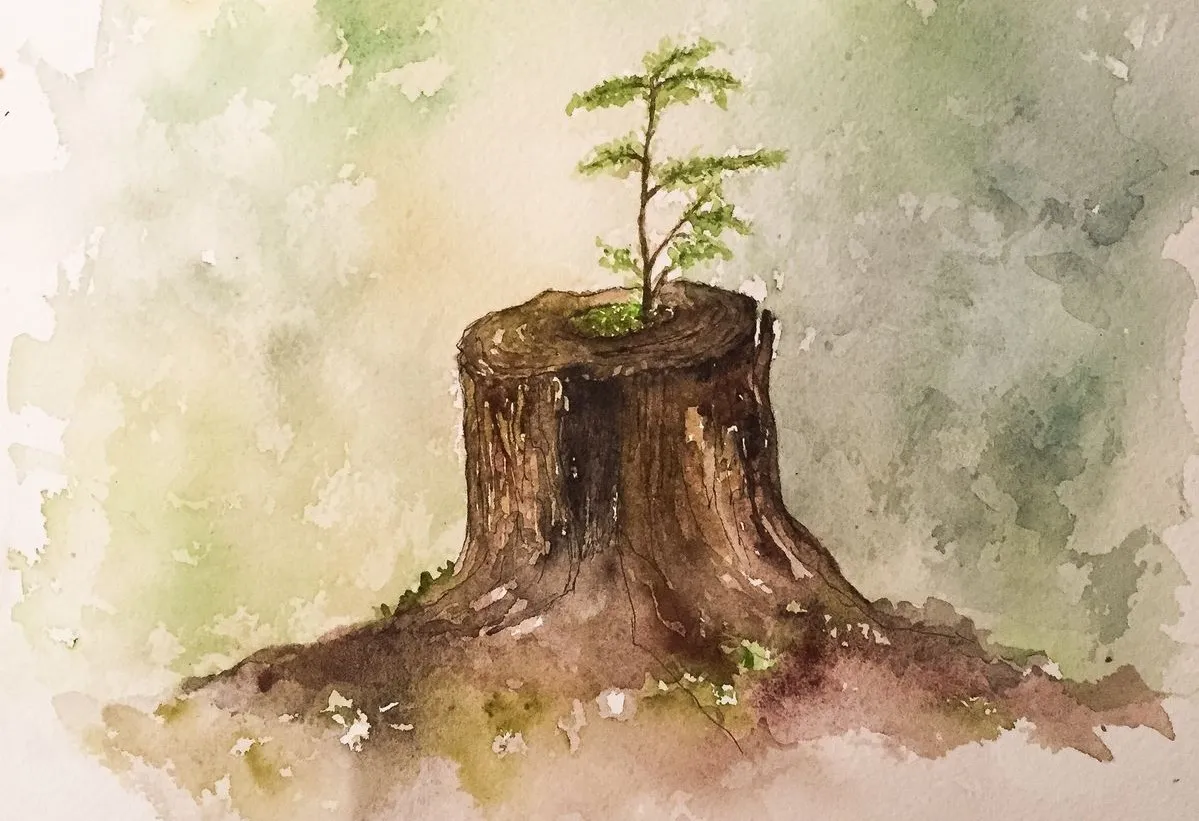
Then Isaiah 11 introduces this image of a shoot growing from the stump of Jesse.

Isaiah is speaking about the promised King who would come from David's family line. A kingdom that appeared to be facing ruin would not be the end of God's promise. Something would grow from what looked like a dead stump.
I thought that was beautiful.
There's something almost stubborn about a little shoot growing out of a stump. The tree has been cut down, everything that made it look alive and impressive is gone, and somehow there's still something growing.
I know the passage isn't specifically about my life, but I couldn't help thinking about it.
Because sometimes I feel like I've spent so much time looking back at what my life used to be that I haven't paid enough attention to what's growing in it now.
And I really did have a good life.
I wasn't some sort of billionaire traveling around in private jets, obviously. But I was healthy. I was in good shape. I could work, earn money, travel, and generally do things without having to think too much about whether my body would allow it.
I miss that.
I still miss it.
Sometimes I catch myself thinking about what it'll be like when I finally get back to that life. When I can work again. When I can travel without worrying about my health. When I can do ordinary things without pain.
It's almost as though I've been waiting for my real life to resume.
But what if this is my real life, too?
Not necessarily the life I wanted, and certainly not the one I planned, but still a life in which God can work.
Maybe my thirties are going to look completely different from what I imagined.
Maybe God will use what I've experienced to encourage someone else. Maybe He'll lead me toward something I wouldn't have considered before. Or maybe, someday, I'll get to enjoy many of the same things I used to enjoy, only with a different understanding of where they came from.
I don't know.
And that's the part I find so difficult.
I would love to know.
But I think I'm slowly becoming more comfortable with the possibility that I don't have to.
Because when I really think about it, I have changed.
My priorities aren't what they used to be. Things that once seemed terribly important don't occupy quite as much space in my mind anymore. I think more about my relationship with God, about the kind of woman I'm becoming, about whether the things I pursue are actually good for me.
I still have plenty of work to do, of course.
But there is growth.
Maybe not the kind I can measure with a paycheck or a plane ticket or a number on a scale.
Still, growth.
And perhaps I've been so busy waiting to become the woman I want to be that I haven't fully recognized I'm already becoming her.
I think both can be true.
I can still be waiting for certain parts of my life to improve while God is already changing other parts of me.
I don't have to pretend I'm satisfied with every circumstance to acknowledge that something good is happening within me.
Then Isaiah 12 comes along, and it's a song of thanksgiving.
After all the warnings, judgment, and promises of restoration, the people are looking toward a day when they'll praise God for His salvation.
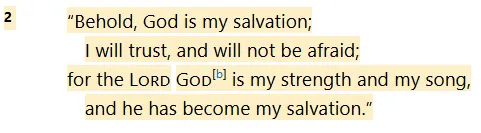
I think what stood out to me was that God Himself is described as their strength.
Not their wealth. Not their military power. Not their ability to make things happen.
God.
And I wonder how different my life would have been if I'd understood that more deeply when everything was going well.
Because I have a tendency to become rather distracted by blessings.
I hate admitting that, but it's true.
When life is good, when I'm busy enjoying things and making plans and having something to look forward to, I sometimes forget to spend time with God.
I don't stop believing in Him, of course.
I just sort of... disappear.
Which is a terrible way to treat someone I claim is the most important part of my life.
And then something goes wrong, and suddenly I'm praying with a level of enthusiasm that probably should have been there all along.
I don't want to keep doing that.
I don't want to spend years asking God to restore my health, my career, and my independence, only to become so absorbed in those blessings that I forget Him again.
If He allows me to experience those things again, I want Him to be at the center of them.
I want to work and remember who gave me the ability to work. I want to travel and look at the world with the same childlike wonder I sometimes feel when I remember that my Father created all of it.
I want to enjoy beautiful things without making them the most important things.
And if I lose something again, I don't want to feel as though I've lost myself along with it.
That doesn't mean I won't cry.
I probably will. I'm only human, and I can be quite emotional about things I care about.
But I don't want my faith to collapse every time my circumstances change.
I want to know that whether I have much or little, whether my plans work out or fall apart, I am still the same person in the way that matters most.
I still belong to God.
I think that's what I've been trying to understand about surrender.
It isn't about not caring for the things God gives us. It isn't about becoming indifferent to whether life is beautiful or difficult.
It's about remembering that those things were never supposed to be the foundation of who we are.
And I think I've spent a lot of my life confusing the two.
I was the girl who traveled. The girl who worked hard. The girl who could afford what she wanted. The girl who was independent and had everything planned out.
And when I lost the ability to do many of those things, I struggled with the feeling that I'd lost a part of myself.
Maybe I had, in some ways.
But perhaps those things were never the whole of who I was.
And perhaps that's something God has been helping me understand.
There's another part of Isaiah 12 that I keep thinking about.

I like that image.
Water is such an ordinary thing to us, especially when we've always had access to it. We turn on a faucet and expect it to be there. We hardly think about it until we need it and can't have it.
I think I've treated a lot of God's blessings that way.
My health, especially.
There are days when I feel sorry for myself because something as simple as bending down to pick something up from the floor hurts.
And sometimes I get so frustrated.
Because it's such a small thing.
Something I used to do without a second thought, and now there are days when even that feels difficult.
I know I've been blessed. I've seen so much of the world. I've had opportunities that many people never get to experience. I've never had to wonder where my next meal would come from.
I have so much to thank God for.
But sometimes I still sulk.
Sometimes I cry because I'm tired of being in pain, or because I miss being healthy, or because I wish I could go about my day without having to think about my body so much.
And I used to feel a little guilty about that.
How can I complain when God has already given me so much?
But I don't think gratitude means I have to pretend something doesn't hurt.
I can be thankful for the life I've lived and still grieve the things I can no longer do.
I can recognize God's goodness and still have days when I'm disappointed.
And when those days come, I usually find myself returning to Him.
Sometimes with a proper prayer. Sometimes just crying and telling Him I'm tired.
I don't always have anything particularly profound to say.
But I think He knows.
And maybe that's another way I'm learning to depend on Him.
Not only by asking Him to change my circumstances, but by allowing Him to be the One I turn to when I don't know what to do with my feelings about them.
So, Father, thank You.
Thank You for the life You've allowed me to experience. For the countries I've visited, the places I've called home, the opportunities I've had, and the ordinary things I didn't always recognize as blessings.
I'm sorry for the times I became so distracted by what You gave me that I forgot to spend time with You.
And I'm sorry for the times I acted as though everything I accomplished was entirely my own doing.
Please keep teaching me what it means to depend on You.
I still hope for healing. I still hope to work again, to travel, to feel strong and healthy, and to enjoy the things I used to enjoy.
But more than that, I want to remain close to You whether those things return or not.
If You bless me with abundance again, don't let me forget You in it. If I experience loss again, help me remember that my identity was never rooted in what I had.
I know I'll still have days when I cry. Days when I'm disappointed. Days when I struggle to understand what You're doing.
But I don't want those days to shake my faith in who You are.
I want to enjoy everything You give me without ever forgetting that You are the greatest thing I have.