Psalms 111-116
I used to think having a steadfast heart meant being unmoved. Completely planted. The sort of faith where bad news arrives and somehow you remain perfectly composed because, well, you trust God. Isn’t that what faith is supposed to look like?
Except I am moved by things all the time.
I am moved by fear, disappointment, anticipation, other people's words, my own thoughts. Sometimes my emotions manage to construct an entire catastrophe out of something that has not even happened yet. And love, perhaps more than anything, exposes how changeable we can be. We can love someone deeply and still have that love complicated by hurt. Someone disappoints us, betrays our trust, says exactly the wrong thing, and suddenly affection has resentment sitting beside it.
Maybe that is why steadfast love between people is so often a choice. We choose to stay, to forgive, to soften again after becoming defensive. We choose love when loving someone is no longer particularly effortless. God's steadfastness seems altogether different.
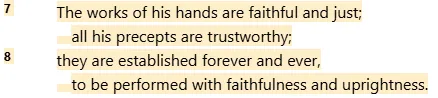
God does not have to overcome fickleness in order to remain faithful to me. His love is not particularly enthusiastic one day and reluctant the next. It does not expand when I am doing well and contract when I have disappointed Him. His steadfast love is rooted in His character.
There is a simple message I keep returning to: no shame or sin is greater than His love for us.
Maybe because it removes the exhausting idea that God's love is something I am perpetually in danger of outrunning. I can wander from Him; I can become distracted, stubborn, ashamed, even deliberately disobedient. None of those things make sin insignificant, but neither do they suddenly make God less Himself.
And there is something deeply relieving about realizing that my relationship with God is not held together by my ability to be as consistent with Him as He is with me.
Perhaps that is precisely why I can become steadfast at all.

I love this verse, but the more I sit with it, the more I notice what it doesn't say.
It doesn't say there will be no bad news.
An inconvenient distinction, honestly. I would quite like faith to mean exemption. Trust God enough and nothing truly terrible will happen; pray enough and everything important will remain intact; be faithful to Him and He will make sure life proceeds somewhat according to plan.
Except God never promised me a life without suffering.
And I know that from experience.
So perhaps there is a difference between trusting God to prevent difficult circumstances and trusting Him within them. If my trust depends upon Him keeping everything from going wrong, then what happens to my faith when something inevitably does?
A steadfast heart cannot mean a heart that never receives frightening news. Maybe it means that frightening news does not get to rewrite everything I already know about God.
There is a strange practicality to surrender when I think about it. I can worry about something relentlessly, rehearse every possible outcome, exhaust myself trying to mentally solve a future I have not entered yet; and after all of that, I will still have no more control over tomorrow than I did before. Or I can give tomorrow back to God.
Not because I know it will go well.
Because I know who will be there if it doesn't.
The trouble is, I forget this constantly.
Sometimes I read about Israel and find myself almost irritated with them. God parted an entire sea in front of you. There was manna on the ground when there was nothing to eat, water coming from a rock when there was nothing to drink, and somehow the next difficulty arrives and we are questioning God again? How?
Except, embarrassingly, I know how.
I do it too.
Maybe my miracles are less cinematic, but they are not exactly subtle. God has provided food and a home. I have a husband who provides for me and cats who bring a frankly unreasonable amount of joy into ordinary life. He carried me through surgeries, chemotherapy, medications, follow-ups, IVF.. and somehow the enormous financial weight that could have accompanied all of it was taken care of. I went through months of unemployment and somehow still traveled through Asia, experienced beautiful things, and paid off debt.
I should have accumulated a fairly convincing body of evidence by now.
And yet give me one sufficiently uncertain future and suddenly I am behaving as though God and I have no history at all.
Maybe that is why Scripture talks so much about remembering.

I keep asking God not to let me forget what chemotherapy felt like. Strange prayer, perhaps. I don't mean that I want to preserve suffering for suffering's sake. I mean that I don't want comfort to make me amnesiac.
There was a time when a warm shower felt luxurious simply because I could stand beneath it without worrying about my PICC line getting wet. There was a time when tasting food properly felt almost miraculous. Wind in my hair, actual hair, finally long enough to be moved by it, could make an ordinary moment feel generous.
Breathing. Eating. Showering. Having hair.
Ridiculously mundane things, until they aren't.
And now that these things belong to ordinary life again, I can already feel myself forgetting what it was like to pray for ordinary.
Apparently gratitude has a terrible memory. Give me back something I once begged God for, let me have it long enough, and eventually I will begin calling it normal again.
Then some new worry appears. Something that feels terribly important in the moment. My attention migrates toward what I don't have, what could go wrong, what I cannot control. Yesterday's answered prayer quietly becomes the background scenery to today's anxiety.
Perhaps remembering, then, is more than sentimentality. Maybe remembering is part of faith.
Maybe I need to remember not because I am supposed to live permanently looking backward, but because there will inevitably be moments ahead when I need evidence of God's character—and there is already so much of it behind me.

Return.
That word stayed with me.
It implies that perhaps I do not always need a new reason to trust God. I don't need another sign, another perfectly timed reassurance, another demonstration that He knows what He is doing.
Sometimes I simply need to return to what I already know.
God has been good to me.
Not because everything that happened to me was good. There is a difference. Not because He prevented suffering, answered every prayer exactly as I wanted, or made every road easy. But because I can look backward at things I once could not imagine surviving and realize that I am standing on the other side of them now.
And He was there.
So maybe I have misunderstood steadfastness. Maybe a steadfast heart isn't one that never trembles, questions, worries, or wanders. I am human; I suspect I will do all four many more times.
Maybe steadfastness is knowing where to return when I do.
My love for God will never possess the perfect constancy of His love for me. My faith will have strong days and embarrassingly fragile ones. I will forget things I swore I would always remember. I will probably worry about futures that eventually arrive looking nothing like the ones I invented in my head. But perhaps my heart does not need to be perfectly steadfast in itself. It only needs to know where to rest.
And what a mercy it is that when I forget, waver, or become frightened by whatever comes next, I am returning to a God who has not moved at all.