Song of Songs 5-8
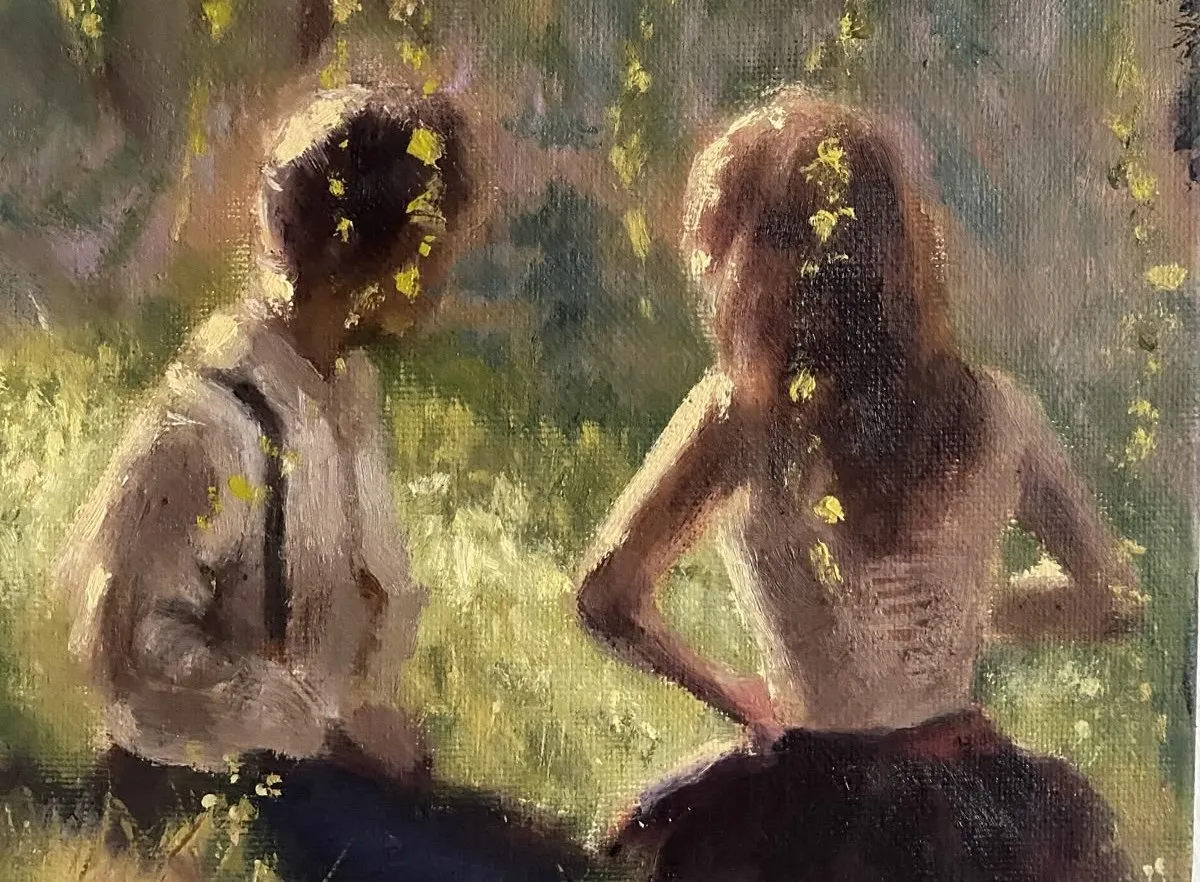
I wonder how often I mistake God’s patience for permission to keep Him waiting.
Not intentionally. I never begin the day thinking that I will leave God out of it. It usually happens in smaller ways. I tell myself I will pray after I finish what I am doing, but that one thing leads to another. My attention keeps finding somewhere else to go, and eventually I realize I have moved through an entire day without truly pausing for Him.
That may be why this moment in Song of Songs stayed with me:
The woman hears the one she loves knocking, but she has already settled into bed. She has removed her robe and washed her feet. Opening the door would mean disturbing the comfort she has already made for herself.
It seems like such a small inconvenience compared with the distance he traveled to reach her. His hair is damp from the night, while she is deciding whether answering him is worth getting her feet dirty again.
I do not think she hesitated because she had stopped loving him. When she finally opens the door and discovers that he is gone, she searches for him. His absence grieves her because his presence mattered to her. The love was still there, but for a moment, comfort became more urgent than responding to it.
Perhaps that is one of the quiet dangers of feeling secure in someone’s love. Security is a beautiful thing, but it can make us less attentive if we begin treating another person’s presence as something guaranteed. We assume there will always be another opportunity, another conversation, or another tomorrow. We become familiar with being loved and, without realizing it, less thoughtful toward the one loving us.
I recognize some of that in my relationship with God.
I know He loves me. I know He is patient and that His mercy is not exhausted by one distracted day. Yet that certainty can sometimes make it easier to postpone time with Him. I assume He will still be there later, so I keep delaying my response—not because I have decided that He is unimportant, but because everything else feels more immediate.
But God’s patience should make me want to draw closer to Him. It should not become my reason for continually keeping Him outside the door.
Lately, I have felt as though I am standing somewhere between the life I know and whatever is supposed to come next. I think about the things I want to do, the places I want to visit, the things I hope to buy, and the people I might meet. There are so many possible directions that sometimes movement itself begins to feel like progress, even when I have not stopped to ask whether I am moving where God wants me to go.
Perhaps His knocking in this season is not a demand for me to figure everything out. Perhaps it is His gentle reminder to be still and trust Him.
I do not know what my future holds, and I think part of me wants to fill that uncertainty with plans. Planning gives me the temporary comfort of feeling in control. But maybe I do not need to force an answer yet. Maybe I need to pause long enough to seek God before my desires begin making every decision for me.
Even the things I ask Him for have made me reflect on this. I can pray for a new car while neglecting the one I already own. I can dream of having a house while failing to care well for the apartment I currently rent. It is easy to imagine that I would be more responsible, grateful, or content if God gave me something greater. But perhaps the way I care for what is already in my hands reveals whether I am prepared to receive more.
The blessing may be what I am waiting for, while stewardship is what God is teaching me now.
And perhaps stewardship includes more than caring for possessions. It may also mean tending carefully to the relationships God has given me, including my relationship with Him. Love cannot remain only something I feel. Eventually, it must become something I choose, protect, and respond to.
Later in Song of Songs, the woman says:
I keep returning to the image of love being sealed over the heart and upon the arm. The heart is private, while the arm is visible. One holds the love inwardly, and the other carries evidence of it outwardly.
It reminds me that devotion begins where no one else can see it.
God does not only want me to look devoted when other people are watching. He wants my love when there is no audience: the prayer no one hears, the obedience no one praises, and the quiet decision to seek Him before arranging my life around everything else I want.
If I genuinely carry love for Him in my heart, it should eventually become visible on my arm. It should appear in the way I speak, the choices I make, the patience I show, the way I treat others, and the care I give to what He has already entrusted to me. What is true in private should slowly shape the person I am in public.
That does not mean loving God will make me immediately perfect. I can love Him sincerely and still fail to reflect Him because I am human. There will be moments when I become distracted, respond poorly, or choose comfort over obedience. The important thing is that I continue returning to Him and allow Him to correct me instead of letting shame pull me farther away.
When faith feels new, devotion can feel almost effortless. There is excitement in discovering God and learning to recognize His voice. The harder part comes when life feels ordinary again; when prayer feels quiet, people test my patience, circumstances require trust, and obedience is no longer accompanied by a strong feeling.
That is when love becomes more than emotion. It becomes a decision made repeatedly.
“Many waters cannot quench love” makes me think of everything that can test it: illness, financial difficulty, distance, disappointment, uncertainty, and doubt. Feelings can weaken under the weight of those things, but lasting love cannot be sustained by feeling alone. It is guarded by the continued decision to love, even when love requires patience, sacrifice, or effort.
Still, for love to remain genuine, it must be freely given. Near the end of Song of Songs, the woman says:
Her vineyard—her body, her love, and her personal self; belongs to her. Her brothers could try to guide and protect her, but they could not own her. Solomon could possess more wealth and authority than anyone around her, but even he could not purchase something that only she had the right to give.
Protection can recognize the value of something without claiming ownership over it. In the same way, love loses something essential when it must be forced, controlled, or bought. It becomes meaningful because it is freely offered.
God desires genuine love from us too. He does not want an outward performance disconnected from the heart. He could force obedience, but forced obedience would not be love. He wants us to choose Him sincerely, allowing obedience to grow from a heart that truly desires to know Him.
Perhaps that is what all these passages have been leading me to consider: whether I am merely secure in God’s love or whether I am also responding to it.
I want to feel safe in His love without allowing that safety to make me careless. I want to trust His patience without treating it as an excuse to delay time with Him. I want to appreciate His presence now rather than waiting for distance, uncertainty, or loss to remind me how much it means.
God is not asking me to understand my entire future before I open the door. He is simply asking me not to let distraction, comfort, or fear keep Him standing outside the parts of my life I have not yet surrendered.